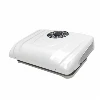
A parking air conditioner is becoming an increasingly practical solution for truck drivers, fleet operators, RV owners, and other vehicle users who need cooling without running the engine. Unlike a conventional vehicle air conditioning system, a parking air conditioner can operate independently of the engine, making it possible to maintain a comfortable cabin temperature during rest periods, overnight parking, or loading and unloading.
However, buyers often have questions about how parking air conditioners work, how much power they consume, how long they can operate, and whether they are suitable for hot weather.
To help you make a more informed decision, here are the top 10 frequently asked questions about parking air conditioners.
How Does A Parking Air Conditioner Work?
A parking air conditioner is an independent vehicle cooling system designed to operate when the vehicle engine is turned off.
Depending on the system design, it can draw electricity from the vehicle's battery, an auxiliary battery pack, or another external power source. The compressor circulates refrigerant through the refrigeration system, while the condenser releases heat and the evaporator absorbs heat from the vehicle cabin.
In simple terms, the system removes heat from inside the vehicle and releases it outside, providing continuous cooling without requiring the engine to remain running.

This makes a truck parking air conditioner particularly useful for long-haul drivers who need air conditioning while sleeping or taking mandatory rest breaks.
How Long Can A Parking Air Conditioner Run?
There is no single operating time that applies to every parking air conditioner.
Runtime mainly depends on:
Runtime mainly depends on:
Battery capacity
Air conditioner power consumption
Target temperature
Outside temperature
Vehicle insulation
Cabin size
Compressor efficiency
How frequently the compressor cycles on and off
Under suitable conditions, an efficient system paired with an adequately sized battery can provide cooling throughout a typical overnight rest period.
Some setups can operate for around 8–10 hours, but actual runtime may be significantly shorter or longer depending on the battery and operating environment.
For buyers, it is therefore more useful to consider air conditioner efficiency and total battery capacity together rather than looking at operating time alone.
Does A Parking Air Conditioner Consume A Lot Of Power?
Power consumption varies by model, cooling capacity, ambient temperature, and operating conditions.
Many electric parking air conditioning systems operate within a relatively moderate power range, with some models consuming approximately 300–600 watts under typical operating conditions. However, this figure should not be treated as a universal specification.
For example, a system operating in extremely hot weather may consume more energy because the compressor needs to work harder to maintain the desired cabin temperature.
If overnight operation is important, buyers should compare the air conditioner's rated power consumption with the usable capacity of the battery system.
A simple calculation can provide a rough estimate:
Battery energy (Wh) ÷ Average AC power consumption (W) = Theoretical operating time (hours)
Actual runtime will normally be lower because of conversion losses, battery discharge limitations, temperature, and changes in compressor load.
What Is The Difference Between A Parking Air Conditioner And A Traditional Vehicle AC?
The biggest difference is how the two systems are powered.
A conventional vehicle air conditioning system is generally driven by the vehicle's engine through its engine-powered components. As a result, the engine normally needs to remain running to provide continuous cooling.
A parking air conditioner is designed to operate independently of the engine.
This provides several practical advantages:
| Feature | Parking Air Conditioner | Traditional Vehicle AC |
|---|---|---|
| Engine required | No | Generally yes |
| Can cool while parked | Yes | Usually requires engine operation |
| Fuel consumption while parked | Minimal direct fuel consumption | Engine consumes fuel |
| Exhaust emissions while parked | Reduced | Increased when engine idles |
| Suitable for overnight rest | Yes | Less practical |
| Auxiliary battery compatible | Yes | Depends on vehicle system |
For truck drivers, this difference can be particularly important when reducing unnecessary idling during rest periods.
How Is A Parking Air Conditioner Installed?
Installation depends on the type and design of the parking air conditioner.
Common configurations include roof-mounted systems, split systems, and integrated vehicle air conditioning units. Some products are designed to be installed through the vehicle roof, while others may use different mounting arrangements.
A typical installation may involve:
- Selecting a suitable mounting location.
- Installing the evaporator and condenser components.
- Securing the air conditioning unit to the vehicle.
- Connecting the electrical system to the battery or auxiliary power supply.
- Checking refrigerant and electrical connections.
- Testing cooling performance and system operation.

Because installation may involve vehicle modifications and electrical connections, professional installation is recommended, particularly for commercial trucks.
Before purchasing, buyers should also confirm the available roof space, mounting dimensions, vehicle voltage, battery capacity, and installation requirements.
How Does A Parking Air Conditioner Perform In Extreme Heat?
A quality parking air conditioner can continue to provide effective cooling in hot weather, but extreme ambient temperatures naturally increase the cooling load.
When the outside temperature rises, more heat enters the vehicle through the roof, windows, doors, and other surfaces. The air conditioner must therefore work harder to maintain the selected cabin temperature.
Several simple measures can improve performance:
Improve Vehicle Insulation
Better insulation reduces the amount of heat entering the cabin and helps the air conditioner maintain the desired temperature.
Use Window Shades
Sunlight can significantly increase the interior temperature. Reflective window shades or curtains can reduce solar heat gain.
Pre-Cool The Cabin
If possible, cooling the cabin before the vehicle becomes extremely hot can reduce the initial cooling load.
Keep Doors And Windows Closed
Opening doors or windows repeatedly allows cooled air to escape and increases the workload on the air conditioning system.
For buyers operating trucks in hot climates, it is important to look beyond the advertised cooling capacity and consider the entire vehicle environment.
Does A Parking Air Conditioner Need Regular Maintenance?
Yes. Regular maintenance is important for maintaining cooling performance and extending the service life of the system.
Basic maintenance may include:
- Cleaning or replacing the air filter
- Checking the condenser for dust and debris
- Inspecting electrical connections
- Checking battery condition
- Inspecting refrigerant-system components
- Cleaning air passages
- Checking unusual noise or vibration
- Inspecting the system for abnormal cooling performance

The maintenance interval depends on the product design and operating environment.
For trucks that operate frequently in dusty construction areas, agricultural regions, deserts, or other demanding environments, the filter and condenser may require more frequent cleaning.
Ignoring basic maintenance can gradually reduce airflow and heat-transfer efficiency, increasing energy consumption and placing additional stress on the system.
What Effect Does A Parking Air Conditioner Have On The Vehicle Battery?
Because an electric parking air conditioner draws power from a battery when the engine is off, battery capacity is one of the most important factors affecting its operating time.
Frequent or extended operation can significantly discharge the battery if the electrical system is not properly sized.
For this reason, many truck owners choose to use an auxiliary battery system rather than relying entirely on the vehicle's starting battery.
The main advantage is simple: the air conditioner can use the auxiliary battery while preserving sufficient power for engine starting.
When selecting a battery system, consider:
- Battery voltage
- Usable battery capacity
- Air conditioner power consumption
- Expected operating hours
- Charging method
- Battery management system
- Ambient temperature
A properly matched battery and parking air conditioner can provide reliable overnight cooling without unnecessarily compromising vehicle starting capability.
Is A Parking Air Conditioner Environmentally Friendly?
Compared with leaving a truck engine idling solely to operate the conventional air conditioning system, an electric parking air conditioner can reduce fuel consumption and tailpipe emissions during parked periods.
This is one reason electric auxiliary air conditioning systems have attracted increasing attention from truck drivers and fleet operators.
The environmental benefit, however, depends on the electricity source, battery system, product efficiency, and how the equipment is used.
From an operating perspective, the key advantage is that the air conditioner can provide cooling without requiring continuous engine idling.
For fleets looking to reduce unnecessary fuel use, operating costs, and parked-engine emissions, an electric parking air conditioning system can be a practical part of a broader energy-efficiency strategy.
Is A Parking Air Conditioner Noisy?
Noise is an important consideration for drivers who use a parking air conditioner while sleeping.
The actual noise level varies according to the compressor, fan motor, installation method, vibration control, airflow design, and operating mode.
Modern parking air conditioners are generally designed to minimize operating noise, but buyers should check the manufacturer's published noise specification instead of assuming that every model performs the same way.
A system with optimized airflow, vibration reduction, and appropriate insulation can provide a more comfortable sleeping environment.
If the air conditioner will primarily be used overnight, noise level should be considered alongside cooling capacity, power consumption, battery requirements, and installation configuration.
What Should You Consider Before Buying A Parking Air Conditioner?

The right parking air conditioner is not necessarily the model with the highest cooling capacity. Buyers should consider the complete operating environment.
The most important factors include:
1. Vehicle Type:
Make sure the system is compatible with your truck, RV, van, bus, or other vehicle.
2. Voltage:
Check whether the air conditioner is designed for a 12V, 24V, or another electrical system.
3. Battery Capacity:
Calculate whether the battery can provide sufficient energy for the expected operating period.
4. Cooling Capacity:
Consider cabin size, insulation, climate, and expected heat load.
5. Power Consumption:
Lower energy consumption can help extend battery runtime.
6. Installation:
Check mounting dimensions, installation requirements, and whether professional installation is recommended.
7. Noise:
For overnight use, a lower operating noise level can make a significant difference.
8. Maintenance:
Choose a system that is practical to inspect, clean, and maintain.
Final Thoughts
A parking air conditioner can be much more than a convenient cooling device. For truck drivers and other vehicle users, it can provide a practical way to stay comfortable during overnight parking and rest periods without continuously running the engine.
The most important point is that parking air conditioner performance depends on the entire system, not just the air conditioning unit itself.
Battery capacity, vehicle insulation, ambient temperature, power consumption, installation quality, and maintenance all influence the final result.
If you are comparing different parking air conditioning systems, focus on the specifications that match your actual vehicle and operating conditions. A properly sized system can provide reliable cooling, improve rest comfort, and help reduce unnecessary engine idling.
For fleet operators and commercial vehicle users, selecting an efficient and properly matched parking air conditioner can therefore be a worthwhile investment in both driver comfort and vehicle operating efficiency.