For long-haul truck drivers, food is one of those everyday expenses that can quietly become a major part of the monthly budget. A few dollars here, a quick meal there, and another stop for coffee or snacks can easily turn into hundreds of dollars by the end of the month.
The problem is not simply that food at truck stops costs more. It is that drivers often have limited alternatives when they are spending days or weeks away from home.
A compact car fridge or 12V truck refrigerator can change that equation. By giving drivers a reliable place to store meat, vegetables, dairy products, drinks, prepared meals, and other perishables, a refrigerator turns the truck cab into a practical base for eating on the road.
And the potential savings are significant. Depending on how often a driver eats out, replacing just one or two purchased meals each day with groceries and prepared food can reduce monthly food spending by $300 or more.
Why Food Becomes An Expensive Part Of Life On The Road
Long-haul trucking creates a unique food problem.
Drivers may spend several consecutive days away from home, often working around delivery appointments, traffic, parking availability, and legally required rest periods. Stopping for a meal is therefore not always a simple choice between cooking and eating out.
Truck stops are convenient because they combine parking, fuel, restrooms, showers, groceries, and restaurants in one location. But convenience often comes with a higher price.
One analysis published by DAT Freight & Analytics described a truck driver who reduced weekly road-food spending from as much as $250 to around $40 after changing from regular truck-stop meals to meal preparation and cooking in the truck.
Schneider has also highlighted the potential savings. Its budgeting guidance estimates that eating meals at truck stops can reach about $160 over a five-day week, while covering two meals a day in the truck with a 12-volt cooler or built-in refrigerator can dramatically reduce that expense.
The lesson is straightforward: the biggest savings do not necessarily come from finding cheaper restaurants. They come from needing fewer restaurant meals in the first place.
A Refrigerator Changes What Drivers Can Buy
Without refrigeration, drivers tend to favor food that is shelf-stable, individually packaged, or easy to consume immediately.
That usually means snacks, packaged meals, fast food, canned products, or whatever happens to be available during a fuel stop.
A refrigerator changes the shopping strategy.
Instead of asking, "Where can I get something to eat?" a driver can ask, "What can I buy for the next three or four days?"
That opens up a much wider range of options:
Chicken, beef, turkey, and other fresh proteins
Eggs and dairy products
Fresh fruit and vegetables
Yogurt and cheese
Sandwich ingredients
Pre-cooked meals
Salads and prepared ingredients
Cold drinks and bottled water
Frozen foods, when the refrigerator includes suitable freezer capacity
This matters because grocery-store pricing and restaurant pricing operate very differently.
A driver buying ingredients in larger quantities can spread the cost across several meals. A restaurant, meanwhile, charges separately for preparation, labor, location, and convenience every time a meal is purchased.
The refrigerator is what makes that grocery strategy practical.
How A Car Fridge Can Help Save $300+ A Month
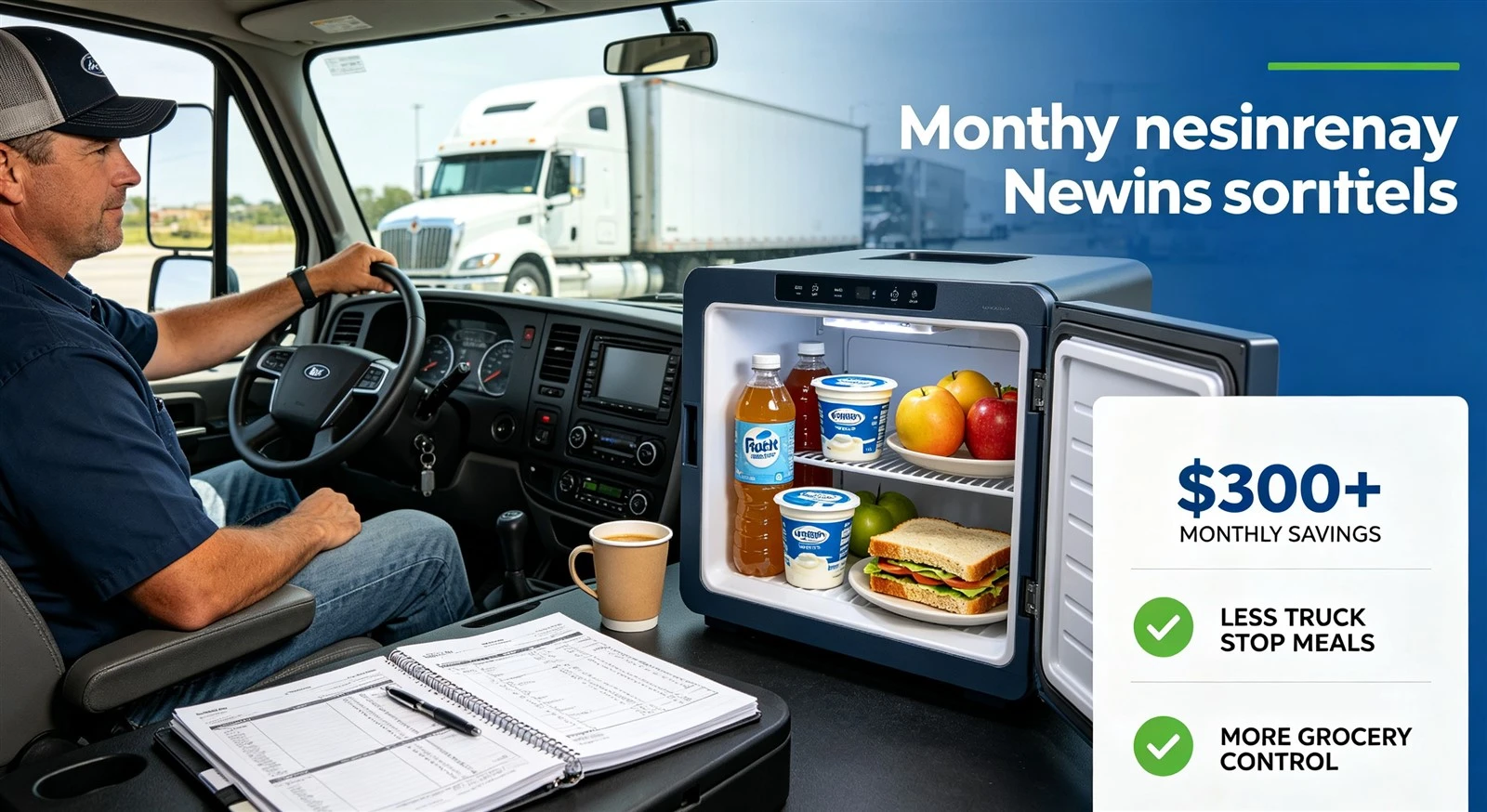
The $300 figure should not be treated as a guaranteed saving for every driver. Actual results depend on route length, grocery prices, eating habits, refrigerator capacity, and how often meals are purchased on the road.
But the math becomes realistic when viewed on a meal-by-meal basis.
Consider a simple example.
Suppose a driver normally buys one $12–$15 meal during each working day. Replacing that meal with food purchased at a grocery store could potentially save around $8–$10 per day.
Over 25 working days:
$8 × 25 days = $200
Now add the savings from replacing several drinks, snacks, breakfasts, or convenience purchases with items carried in the refrigerator.
An additional $4–$5 per day in avoided purchases could produce another:
$4 × 25 days = $100
That brings the potential monthly difference to approximately $300.
For drivers who regularly purchase two or three meals away from the truck, the difference can be considerably larger.
This is not a promise that every trucker will save exactly $300. It is a practical illustration of how relatively small daily changes can create a substantial monthly difference.
The Real Advantage: More Control Over Meals
The financial benefit is only one part of the equation.
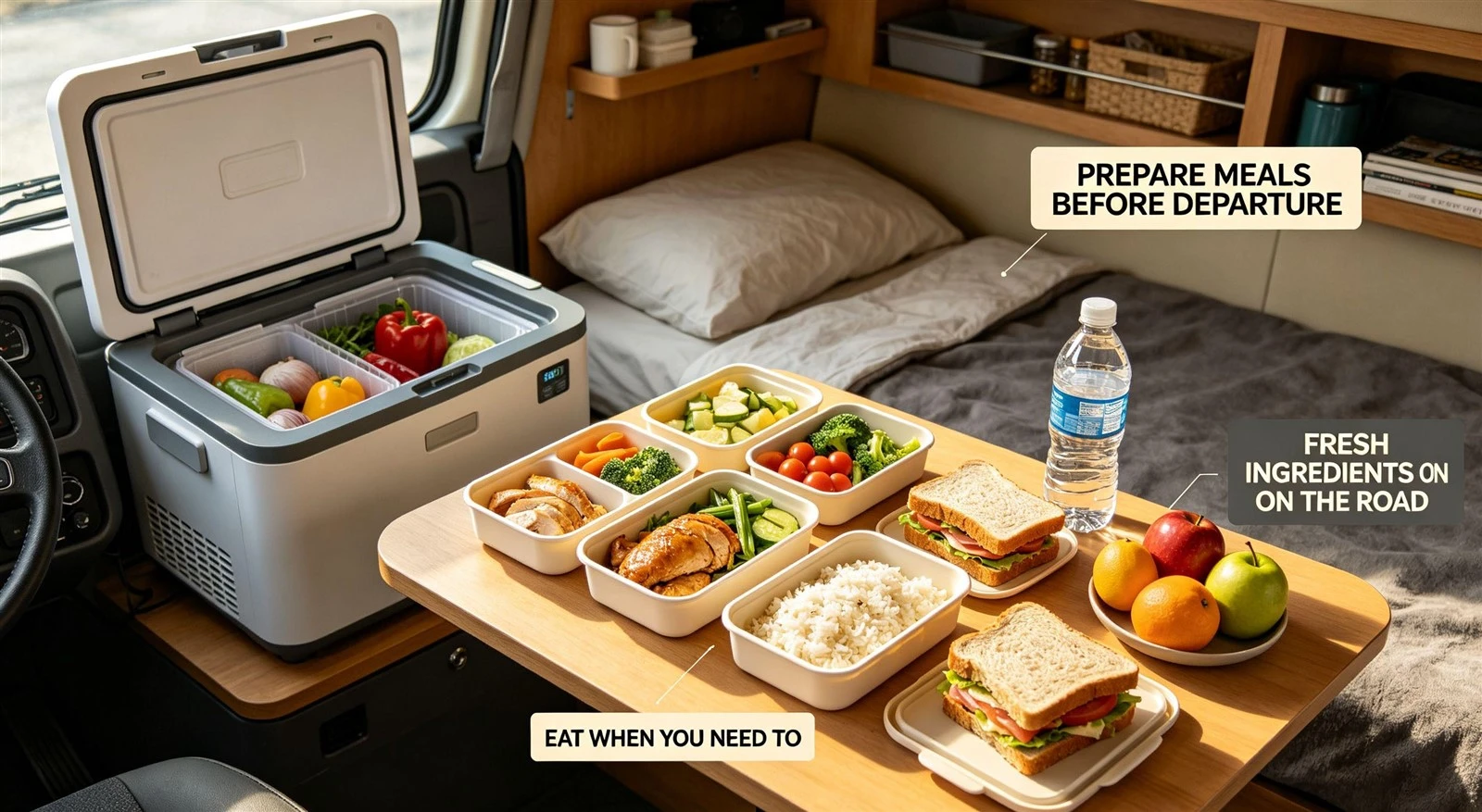
A refrigerator also gives drivers greater control over what they eat.
When the only realistic option is a restaurant or truck-stop counter, the available choices are determined by the location. If a driver has a refrigerator in the cab, food can be selected in advance.
That means a driver can stop at a supermarket once or twice a week, purchase ingredients according to a plan, and carry those foods between stops.
Meal preparation also becomes much easier.
For example, a driver might prepare several portions of chicken, rice, vegetables, sandwiches, or pasta before leaving home. Instead of searching for a meal after a long shift, the driver already has food waiting in the sleeper cab.
That small change can eliminate one of the most common problems with eating on the road: making food decisions when tired and hungry.
A Truck Refrigerator Is More Than A Cooler
Not every portable refrigerator provides the same experience.
Traditional ice coolers can keep food cold, but they require ice, create condensation, consume storage space, and need regular cleaning and replenishment. Melting ice can also make food storage inconvenient.
A powered compressor refrigerator offers a different approach.
A 12V car fridge can operate from a vehicle's electrical system and maintain a controlled temperature without relying on bags of ice. Depending on the design, some units can provide both refrigerated and frozen storage.
For truckers, several characteristics deserve particular attention:
1. Power Compatibility
A refrigerator designed for vehicle use should match the truck's electrical system and intended operating conditions.
12V and 24V systems are common considerations in commercial vehicles, so drivers should confirm voltage compatibility before purchasing.
01
2. Capacity
A refrigerator that is too small may not hold enough food for a multi-day trip. One that is unnecessarily large can consume valuable space inside the sleeper cab.
The right capacity depends on how often the driver shops for groceries and how many meals are normally carried.
02
3. Energy Efficiency
Because the refrigerator may operate for extended periods, power consumption matters.
Efficient compressor operation can help reduce the electrical load on the vehicle while keeping food at the required temperature.
03
4. Temperature Stability
For fresh food storage, maintaining a consistent temperature is more important than simply making the interior feel cold.
A well-designed refrigeration system should be able to maintain the selected temperature under changing ambient conditions.
04
5. Vehicle-Friendly Construction
Truck cabins experience vibration, temperature changes, and limited space. A refrigerator intended for mobile applications should therefore be designed around those conditions rather than simply adapting a household refrigerator for vehicle use.
05
The Best Strategy Is Not To Stop Eating At Truck Stops
There is no need for drivers to eliminate restaurant meals completely.
The smarter approach is to make them occasional rather than automatic.
A practical weekly routine could look like this:
Before departure:
Buy groceries and prepare several meals.
During the trip:
Keep perishable foods refrigerated and use prepared ingredients for meals.
At selected stops:
Purchase additional groceries when supplies run low.
For convenience:
Use truck stops or restaurants when schedules, routes, or personal preferences make them worthwhile.
This approach creates flexibility without making food preparation another full-time job.
It also changes the role of the truck stop. Instead of being the place where every meal is purchased, it becomes one option among several.
Why This Trend Matters To The Trucking Industry
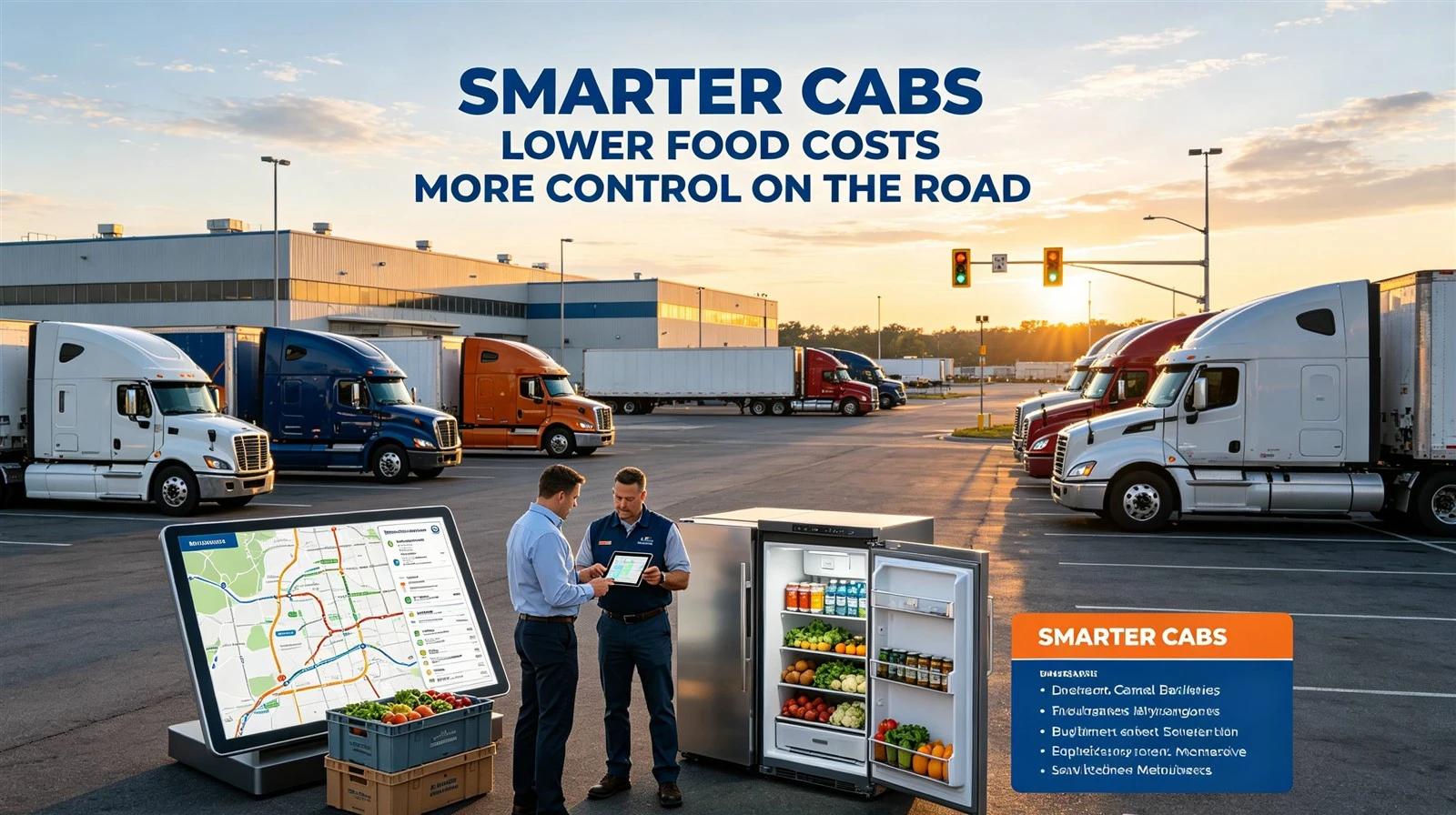
The growing interest in onboard refrigeration reflects a broader change in the trucking lifestyle.
Today's drivers increasingly look for ways to make the sleeper cab more functional. Refrigeration, cooking appliances, compact storage, and other cab accessories can make long-distance work more comfortable while helping drivers manage everyday expenses.
Food is particularly important because it is a recurring cost.
A refrigerator is a one-time equipment investment, while restaurant meals continue to cost money every day. Once the equipment is in place, the savings opportunity repeats throughout the driver's time on the road.
That is why the value of a truck refrigerator should not be judged solely by its purchase price.
The more useful question is:
How much can the refrigerator save over the months and years that it is used?
Choosing The Right Refrigeration Solution For Export Markets
For manufacturers and distributors serving international trucking markets, vehicle refrigeration also requires attention to regional requirements.
Different markets may use different vehicle electrical systems, installation configurations, plug standards, and operating environments. Commercial customers may therefore need more than a basic consumer refrigerator.
This is where product design, manufacturing consistency, and export experience become important.
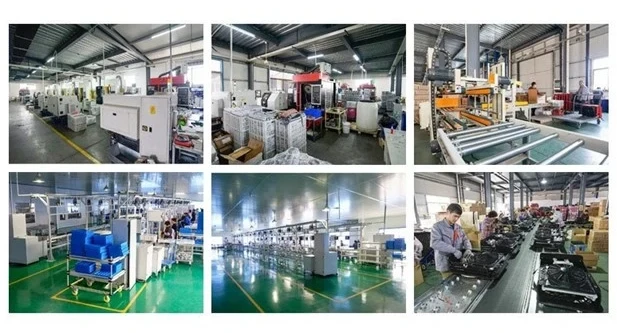
Dongjelion is focused on supplying vehicle-related refrigeration products for overseas markets, with solutions designed around the practical requirements of mobile applications. For international buyers, distributors, and commercial vehicle customers, the emphasis is not simply on cooling performance but also on compatibility, usability, reliability, and long-term operation.
As demand grows for more practical and comfortable truck-cab solutions, vehicle refrigeration can become an increasingly useful part of the modern sleeper-cab setup.
From Convenience Expense To Everyday Savings
The idea behind a car fridge is surprisingly simple.
It does not eliminate food costs. It changes where and how those costs occur.
Instead of repeatedly paying retail restaurant prices for individual meals, drivers can purchase groceries, store fresh ingredients, prepare food in advance, and decide when they actually want to eat out.
For a trucker who spends heavily on food during long hauls, that difference can potentially reach $300 or more per month.
More importantly, the refrigerator gives drivers something that is difficult to find at a truck stop: choice.
- Choice over what to eat.
- Choice over when to eat.
- Choice over how much to spend.
For people who spend much of their working lives behind the wheel, that small piece of equipment can make a surprisingly large difference.
The modern truck cab is becoming more than a place to drive and sleep. It is increasingly a compact living and working environment.
A reliable 12V car fridge, combined with basic meal preparation, can help truck drivers reduce dependence on fast food, keep fresh ingredients available, and potentially cut hundreds of dollars from their monthly food budget.
The $300+ monthly saving is not universal, but the underlying principle is: when drivers can store their own food, they have far more control over one of the most persistent expenses of life on the road.
For truckers, fleet operators, distributors, and international buyers looking for vehicle refrigeration solutions, Dongjelion continues to develop products for overseas markets with the practical demands of mobile use in mind.